
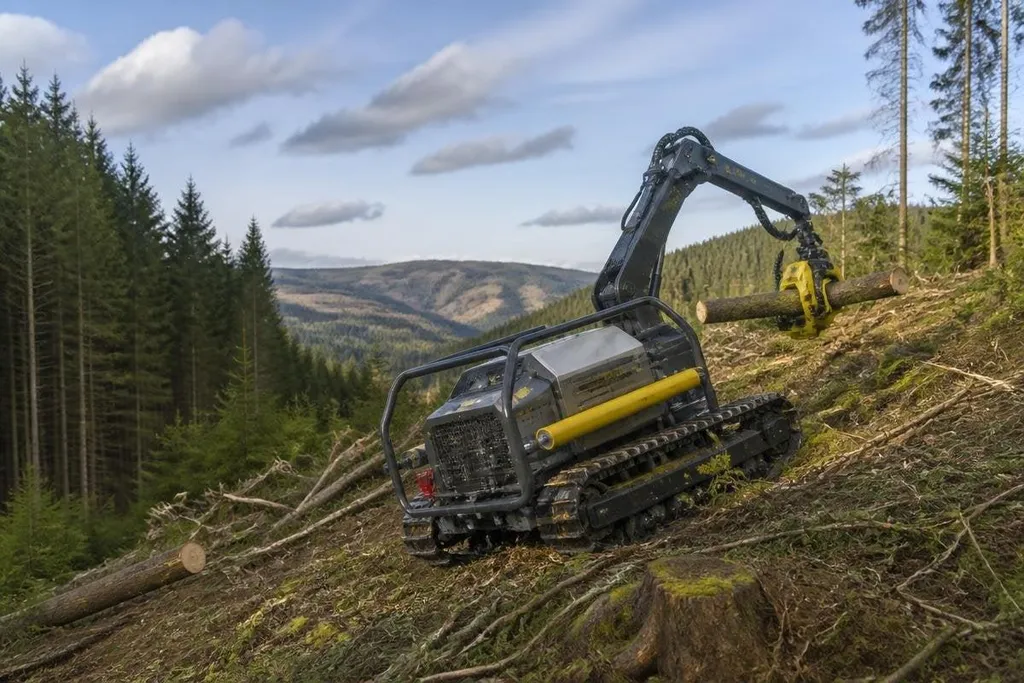
Forestry robots are moving into work where steep ground, falling branches, heavy loads, and poor visibility raise the cost of human labor. Their value comes from handling specific jobs for longer periods while people control the plan, check the result, and deal with work that still needs judgment.
Quick read
- Robots can map forest plots, carry tools, and move cut wood across rough ground.
- Cameras, LiDAR, and satellite positioning help them work around trees and uneven soil.
- The hard test is reliable work across changing weather, slopes, mud, and dead ground cover.
The jobs that suit robots
A forest is a difficult place for wheels and legs. Tree roots interrupt paths, branches block sensors, and a route that works in dry weather may fail after rain. A forestry robot needs enough ground clearance, traction, and control to keep moving without damaging the soil.
That makes some tasks a better fit than others.
A robot can carry sensors through a plot, record tree locations, inspect damaged areas, or move small loads between a cutting site and a road. These jobs repeat over distance, so a machine can reduce the time people spend walking, carrying, or entering unsafe areas.
The work still needs a person who knows what the data means. A camera may find a broken tree, while a forester decides whether it should be removed, left for habitat, or checked again after a storm.
How the machines find their way
Forestry robots combine several sensors because no single one works well in every part of a forest. LiDAR measures distance with laser pulses, cameras record color and shape, and satellite positioning gives the robot a wider location reference when the tree cover allows a signal through.
A robot can use these inputs to build a map of its route. This map helps it avoid trunks, follow a planned path, and return to a charging point or work area. When branches block satellite signals, the robot needs local sensors and wheel or leg movement data to estimate its position.
That mix explains why forestry automation needs more than a robot body. The software must handle loose soil, slopes, changing light, and objects that were not in the map. A machine that works well on a marked test route may still stop when grass covers a rut.
Loose soil and steep ground can turn a forestry robot’s quoted work rate into a site-specific number. Forestry robotics reports from Robot24.com can connect that result to the forest type, slope, task, test date, and worker time left after each run. Those details lead into why the need is growing.
Why the need is growing
Forestry work is spread across large areas, and many sites sit far from roads, power, and repair shops. A machine that can collect data or move supplies during a long work window may reduce repeated trips for a small crew.
Safety is another reason to test robots in forests. Storm damage can leave branches under tension, unstable trunks, and blocked paths. A remote machine can inspect part of a site before a person enters, though remote control does not remove the need for a safe work plan.
Environmental checks also matter. Heavy vehicles can compact soil and damage young growth when they use the same route again and again. A smaller robot may cause less harm, but that depends on its mass, wheel design, route, and the condition of the ground. The claim needs a field measurement for each machine.
Where the limits remain
The machines still face a basic problem: the forest changes faster than the map. A fallen tree can block a route, rain can reduce traction, and snow can hide the ground edge. A robot that stops safely is useful; one that keeps driving after losing its position is a safety risk.
Power is another limit. Carrying batteries for long work periods adds weight, while a lighter machine may need more charging stops. Remote operation also needs a dependable radio or cellular link, and many forests have weak coverage.
The business case depends on the task. A robot that gathers data across a large area may save enough walking time to earn its place. A machine that needs a person beside it for every metre may add cost without removing much work. The maker needs to show hours worked, distance covered, stops, repairs, and soil impact in real forest conditions.
A buyer's field checklist
Before a forestry team funds a robot trial, check these points:
- Define the task: name the job, load, distance, and ground type.
- Test the route: include slopes, roots, mud, low branches, and weak signal areas.
- Measure the person-time: record who must supervise, recover, charge, and repair the machine.
- Check the damage: inspect soil marks, broken plants, and route changes after each run.
- Set a stop rule: decide when the robot must halt and how a person reaches it.
- Price the full trial: include transport, batteries, software, training, and service.
I'd back forestry robots first as inspection and support machines, because those jobs can limit human exposure without asking the robot to make every forest decision. The next useful proof is a logged trial across wet and dry ground, with the same route measured by people and machines.